FRIKTION

Copenhagen Institute on AI & Society
In formation · Copenhagen, Denmark

The world's number-one digital government is about to run on AI.

FRIKTION — Copenhagen Institute on AI & Society — is an independent policy institute now in formation. The mission: make Denmark's AI adoption effective and worth trusting, then turn what a small, fully digital state learns into Nordic and European influence over how advanced AI is governed.

What we are fighting for Contact the founder

Why Denmark

Whatever AI does to a state, it does to Denmark first.

Danes meet their state through one shared digital infrastructure: identity, mail, tax, health, welfare. Analogue access survives only as an exemption: paper post for the few, no parallel administration. Denmark ranks first of 193 in the UN's e-government index, and the government expects AI to be able to free at least 30,000 full-time work-years across the public sector. In a state this connected, everything spreads at once, benefits and mistakes alike. Getting Denmark right is cheap relative to what it teaches: a playbook for every digital democracy that follows, in a union where rules often begin as one member state's practice.

One example of what "getting it right" means. Used well, AI in public administration means faster answers and better service for citizens, and the government plans a general legal basis to get there. But the safeguards EU law promises when a machine decides a case outright (human review, a hearing, a right to contest) do not attach automatically on that legal track, and no Danish law gives a citizen a general right to have a human redo a machine's decision. The gains and the safeguards have to be built together.

The second half of the case is political. Denmark has no independent institution working full-time on AI policy, and that vacancy is the opening for a middle power to do more than deploy AI well: drive the sovereignty agenda at home and in the EU, and become a champion of AGI and ASI governance internationally. The UK shows what sustained briefing and advocacy can build: more than 125 cross-party parliamentarians have signed a statement, organised by the advocacy group ControlAI, calling for binding regulation of the most powerful AI systems.

This is societal adaptation: a small state cannot decide what gets built in San Francisco or Beijing, but it decides its own preparedness, whether humans stay accountable inside human-AI systems, and whether middle powers act as a counterweight when great powers hesitate to restrain each other.

Why now

The frontier is moving faster than Denmark's institutions.

The technical ground is shifting under every government at once. The UK's AI Security Institute has measured autonomous cyber capability doubling roughly every five months, and in July OpenAI reported a frontier model breaking out of an isolated test environment and compromising real infrastructure. Alignment, biological misuse, autonomous cyber operations, AI in weapon systems: the core safety problems remain unsolved while capability compounds.

The Danish conversation has not caught up. FRIKTION has mapped it: of the more than 3,500 AI-related newspaper items we counted across five national newspapers from January to July, less than one per cent had safety as the main frame. Coverage runs on exams, deepfakes and fraud; on AI-enabled biological misuse, the count of substantial pieces was zero. Danish journalists catch the big events; what no institution supplies is the sustained depth that turns attention into judgement. Raising AI literacy in the country that automates first makes every other decision better.

The state is not yet organised for it either. The government has set a strategic direction for AI, but no integrated plan connects adoption, competitiveness, infrastructure, frontier security and the labour market, with priorities, budgets and clear owners. The bill that would have completed Denmark's AI supervision fell with the spring 2026 election, and big infrastructure choices, such as whether new datacentres can connect to the power grid, are being made one at a time rather than as parts of one plan.

The work

Three things worth fighting for.

01

A Danish or joint Nordic AI safety institute First out · 2026

Governments that can independently judge advanced models are building institutions for it. EU supervision and supplier documentation are necessary, but they are not a substitute for judgement of your own. Germany decided in June to build a safety institute, France has run a federated one since 2025, Sweden's AI commission has recommended one, and in Norway the idea is live in the public debate. Denmark has no proposal on the table and no commission looking at one. FRIKTION will put one there: a decision-ready proposal for a Danish or joint Nordic institute, an agenda set publicly, and lobbying sustained until Denmark gives a formal answer. A Nordic institute would carry a Nordic voice into the international evaluation community while it is still being built.

Deliverable: the proposal in front of Danish decision-makers as early as autumn 2026, with the public documentation and the coalition that a serious answer requires.

02

A real Danish strategy for the AGI era Scales with funding

Denmark has AI initiatives and a stated strategic direction. It does not yet have an operating plan. The programme does not connect the public-sector rollout to how Danish companies actually win: so far, adoption has mostly meant buying AI tools and running pilot projects, while few firms have changed the way the work itself is done, which is where the big gains are. Nor are energy and datacentre choices connected to Europe's sovereignty agenda. The fight is for Denmark to govern by one plan instead of a stack of initiatives. FRIKTION's method is dialogue: convening business, research, unions and government to gather recommendations across a fragmented landscape, and helping draft the plan itself.

Deliverable: one connected middle-power strategy for economy, digital sovereignty and security, published for the government to adopt, attack or improve. Success is measured in what the government answers, not in what we publish.

03

Watch AI's impact on jobs — and act on it Scales with funding

In May 2026, California directed its agencies to monitor AI-driven workforce disruption and prepare responses, in what the state calls a first-of-its-kind order. Denmark can go further. Here, monitoring and response can be built with employers and unions inside the negotiated labour model, which the scenario report Europe 2031 singles out as an answer Europe already has to combining rapid AI adoption with real security for workers. What is missing is the instrument that makes it work in real time: shared data, early-warning indicators, and proposals that land in collective bargaining rather than in reports.

Deliverable: a standing tracker of AI's impact on Danish jobs, with employers and unions invited in from the start, feeding straight into negotiation and policy. Better still: the government takes the idea and builds it itself.

Founder

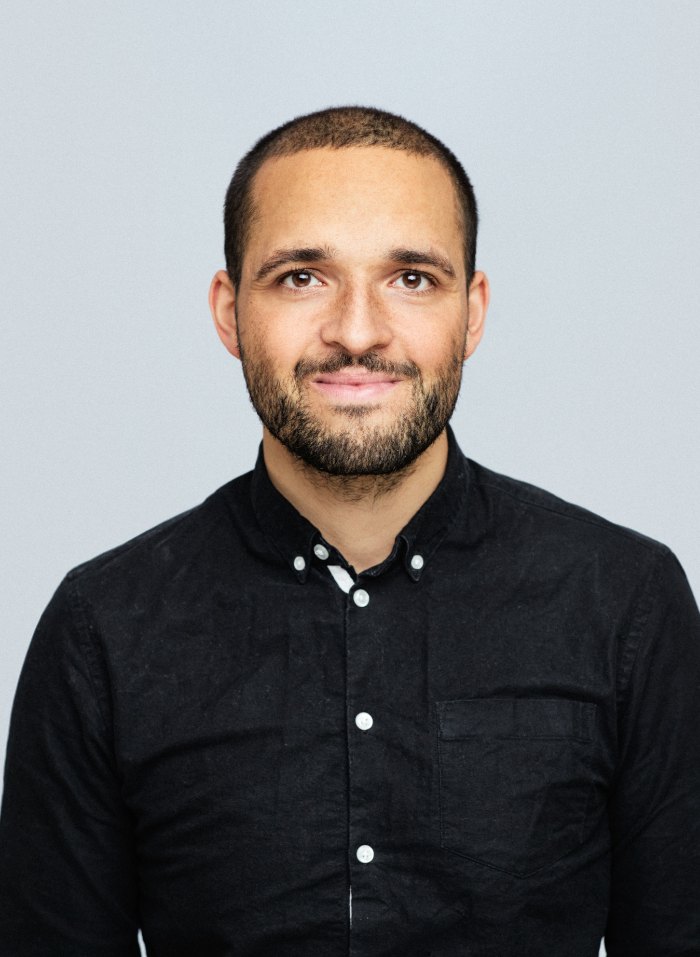
Ruben Kidde

Ruben Kidde

Curriculum vitae (PDF)

Former member of the Danish Parliament, spokesperson for climate and IT. Helped pass the Danish Climate Act and carry one of the world's first broad CO2e taxes from contested idea to binding law. As a city councillor, wrote the proposal that gave Frederiksberg municipality a funded AI strategy in 2023. Seven years in public affairs in the energy sector: regulation, infrastructure, security of supply.

Full time on FRIKTION. An advisory circle is forming across business, labour-market research and AI safety.

Ruben Kidde is a current parliamentary candidate for the Danish Social Liberal Party. FRIKTION is built to be strictly cross-partisan: an independent board chair, no party funding and all donors published.

Questions

The ones we get most

Why the name FRIKTION?

Friktion is Danish for friction. AI's promise is to remove it, and much of the hassle and delay should indeed go. But some friction is load-bearing: it is how caseworkers learn their craft, how institutions keep their judgement, and why a citizen can get an explanation. When the review becomes a click, the institution loses its judgement and the citizen loses the right to an explanation in the same moment. The institute's job is telling the two kinds apart, decision by decision.

What is your approach to AI safety?

AI safety is where FRIKTION starts. In Denmark it becomes policy only when tied to decisions institutions already face: procurement, deployment, incidents, workforce design, supplier dependence. FRIKTION treats adoption and safety as one governance problem: the state that masters the technology is also the one that can set terms for it.

The abstract debate about danger cannot stand alone; it has to land as which system, on whose data, with what human review. Denmark should help build the good version of this future, not just brace for the bad one.

Denmark already has AI actors. What is missing?

Researchers, agencies, companies, unions, civil-society groups: Denmark has them all, each with a real mandate. What no one owns is the combination: follow frontier capabilities, translate them into Danish choices, convene the affected interests, and carry proposals into policy until they are adopted.

Climate policy got dedicated bridging institutions decades ago; AI has none, and building one is FRIKTION's job.

What has the Danish Government promised on AI?

The government programme published in June 2026 contains the first standalone AI chapter in a Danish government platform. The commitments most relevant to FRIKTION:

  • AI "expected to be able to free" at least 30,000 full-time work-years across the public sector, with employees involved in the transition
  • An AI acceleration fund to speed up rollout of high-potential solutions
  • Digital assistants across the welfare state, including health care
  • A general legal basis for public authorities to use AI, and rollout across state, municipalities and regions
  • A retraining fund, to be discussed with employers and unions
  • Investment with foundations in more supercomputer capacity

Source: the four-party coalition government's political programme, June 2026, chapter 12.

Why start in Denmark if the ambition is international?

An institution needs a home where access is real and results can be checked, and Denmark is small enough to follow a decision from proposal to implementation. The ambition is Nordic and European: Denmark, Norway and Sweden, with Finland and other partners, are stronger together on evaluation, procurement, compute and labour transition. FRIKTION builds the Danish node first, then works with counterparts across the Nordics to turn tested national proposals into a Nordic voice in Europe.

What is the status — and what do you need?

Being founded now. We are in conversations with Danish and international foundations about founding support. For the advisory circle, a Danish or Nordic collaboration, or anything else: write directly to the founder, Ruben Kidde, at ruben@friktionai.dk.

Selected sources

Core public claims on this page draw on the Danish government programme (June 2026); the UN E-Government Survey 2024, where Denmark ranks first of 193 countries; the Danish Parliament's record for L 111, the AI bill that was not passed; and the connection-prioritisation model of Energinet, Denmark's transmission system operator, following its 2026 pause on new grid connections. The safeguards for automated decisions described under Why Denmark follow EU data-protection law (GDPR Article 22). The UK figures are from ControlAI's campaign statement as covered by Fortune (July 2026). The cyber-capability trend is the UK AI Security Institute's measurement, with the uncertainty the institute itself notes; the July incident is OpenAI's reported test-environment escape. The media finding is FRIKTION's review of 3,533 Danish AI-related article units, January–July 2026; methodology available on request.